

You do not need to know Arabic to support your child’s Quran learning. Your role at home is encouragement and consistency; the teaching happens in class.
Here is what actually works.
Set a Fixed Practice Time
After Maghrib is the best time for most families, school is done, the house is calmer, and it naturally connects practice to Islamic routine. Before or after Fajr also works well for early risers; even 15 to 20 minutes is enough.
The key is keeping it the same time every day so it becomes a habit, not a negotiation.
Ask Your Child to Revise Their Lesson
After each class, ask your child to read back what they covered with their tutor. If they make a mistake, calmly note it and tell them to ask their tutor in the next session. Do not push for correction yourself; one wrong habit taught at home takes longer to fix than the mistake itself.
Do Not Expect Too Much Too Fast
The biggest mistake parents make is expecting fast progress, especially with younger children. Forcing or showing frustration when a child struggles does the opposite; it makes them associate Quran learning with stress and eventually pulls them away from it.
Calm, steady, and positive beats pushy every time.
If You Cannot read Arabic
Ask your child to read to you anyway. You do not need to understand Arabic to hear whether they are reading with confidence or hesitating. That alone tells you whether home practice is happening.
If possible, consider joining an adult beginner class yourself. Many of our parents at Islamic Tuition started learning alongside their children. It helps you connect with what your child is learning and gives you a way to practice together, even at a basic level. Our Quran recitation course has flexible timings built around adult schedules.
Create an Islamic Learning Corner ( Pro Tip)
This one makes a real difference, especially for younger children.
Set up a small dedicated corner in your home for the Quran and Islamic learning. Add a few things that make it feel special:
- Arabic alphabet wall chart
- A small Quran stand with the Quran or Noorani Qaida
- A prayer mat nearby
- Simple wall art with a short Ayah, Dua, or an encouraging Islamic quote
- A Dua chart or Salah steps poster
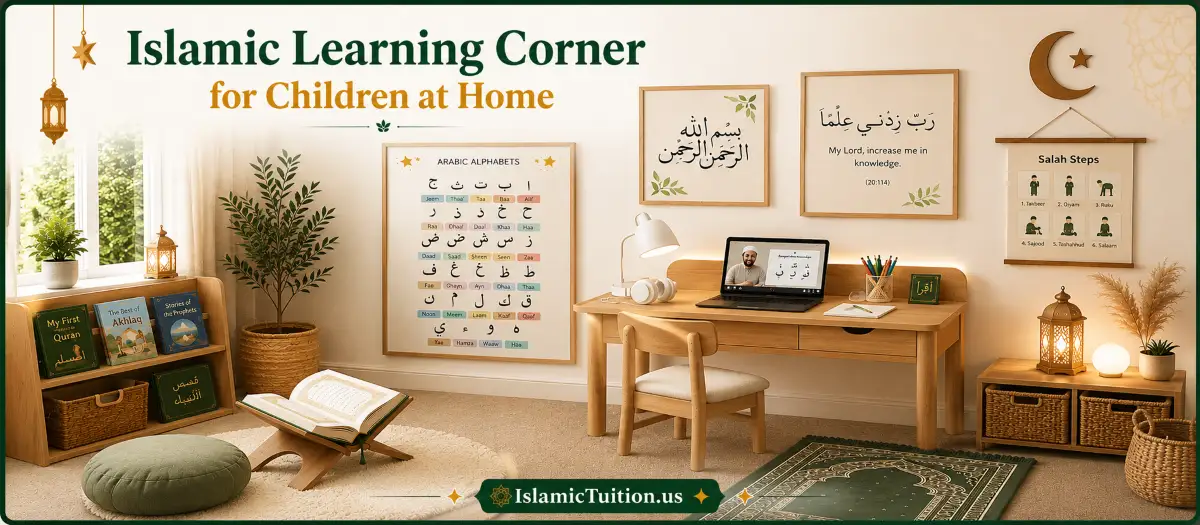
When a child sits in that corner, they are in a different environment from where they watch TV or play games. That shift alone improves focus and builds a positive association with learning. It does not need to be large or expensive; a dedicated corner with intentional Islamic touches is enough.
Stay Connected With the Tutor
Your tutor notes what was covered in each session. Use that to guide home practice. If they say revise the Sukoon lesson, that is what the 15-minute home session covers. Parents who follow the tutor’s weekly guidance consistently see noticeably faster progress than those who leave practice open-ended.
For more on how structured online classes support home learning compared to traditional settings, read our post on online Quran classes vs mosque classes.
Frequently Asked Questions
15 to 20 minutes is enough. Consistency matters more than length.
Keep it short and calm. A relaxed 5 minutes is better than a forced 20. Never link Quran learning to punishment.
Note the mistake calmly and ask them to mention it to their tutor. Avoid correcting Arabic pronunciation yourself unless you are confident it is wrong.
When they read new lines independently without help. Your tutor will confirm this. See our guide on how long Quran reading takes for realistic timelines.