

Starting something you have never done before is always the hardest part. Learning to read the Quran is no different.
Many beginners, both children and adults, put it off because Arabic looks completely unfamiliar, and the idea of reading a whole book in a new script feels overwhelming before even beginning. But in practice, the starting point is simpler than most people expect. The key is knowing what to learn first and in what order.
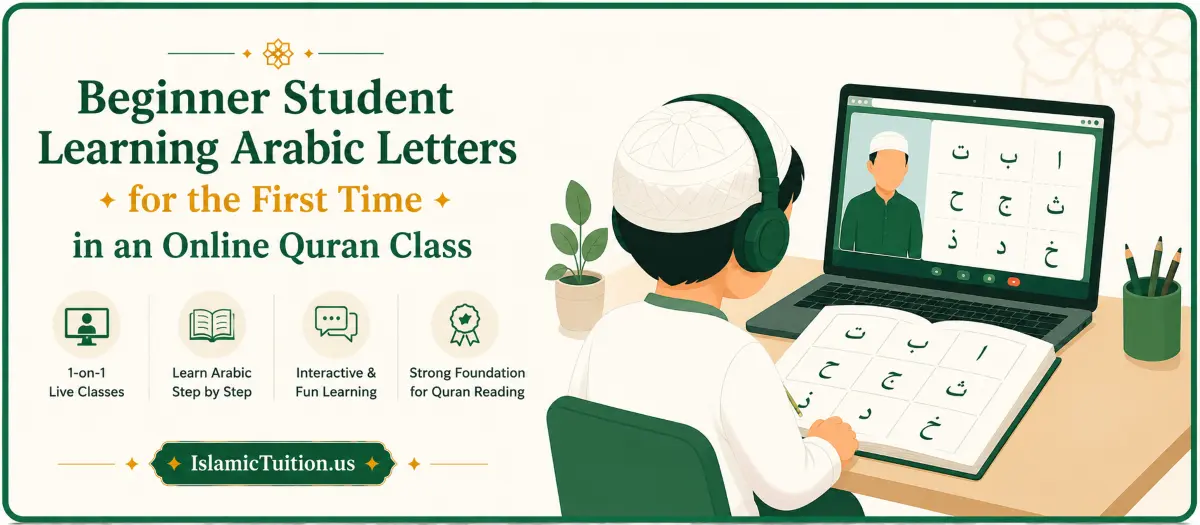
Step 1: Arabic Alphabet and Letter Sounds
Everything starts here. Before reading a single word of the Quran, a beginner needs to recognise the 28 Arabic letters and understand the sound each one makes.
This is not as difficult as it looks. Arabic is a phonetic language, meaning letters are pronounced exactly as they appear. There are no silent letters, no unpredictable sounds. Once you know what each letter sounds like, you can read any Arabic word out loud, even without understanding its meaning.
The first lesson for every new student, whether a 5-year-old child or a 40-year-old adult, starts in the same place. The tutor introduces the Arabic letters one by one, demonstrates the sound, and asks the student to repeat. That is it. No grammar, no translation, no overwhelming rules on day one.
Step 2: Learn Through a Structured Qaida
A Qaida is a beginner’s primer designed specifically to take a student from knowing nothing to reading connected Arabic text in a structured way. It covers letters, vowel sounds (Harakat), connected letters, and gradually builds toward reading full words and sentences.
Most students who struggle with Quran reading for years skipped proper Qaida training or rushed through it. The gaps that are created show up repeatedly later, mispronounced letters, incorrect vowel lengths, and difficulty with joined letter forms.
Our Noorani Qaida course uses a sound-based approach built with English-speaking students in mind. Instead of teaching letters using traditional Arabic naming conventions, we connect each letter to an English sound equivalent. Baa sounds like “B”, Alif sounds like “A”, so when they combine, the student reads “BA” naturally. For children and adults living in the USA who are more familiar with English sounds, this method makes the early weeks noticeably more comfortable.
Step 3: Move to Quran Reading at the Right Time
Once a student can read connected Arabic text smoothly with correct vowel sounds, they are ready to begin Quran reading. This is not a fixed timeline. Some students reach it in 2 months, others in 5 or 6. The readiness is based on ability, not time spent.
Starting Quran reading before Qaida is properly complete is one of the most common mistakes. It leads to slow, broken reading with mispronunciations that become harder to fix the longer they are practiced.
What About Adults Who Feel Embarrassed Starting From Zero?
This comes up more than most people expect. Many adult beginners carry a quiet sense of embarrassment about not having learned as a child. Some feel they should already know this by their age.
The truth is that learning the Quran as an adult is something to feel good about, not ashamed of. Starting is the hard part. Most adults who begin find within the first few weeks that their progress is faster than they expected, partly because they understand instructions clearly and partly because they are genuinely motivated.
In our classes, every student, regardless of age, is treated with the same encouraging, patient approach. The classroom environment is private, one-on-one, and judgment-free. There is no group to compare yourself to. Just you, your tutor, and the lesson.
Learning Islam Alongside the Quran
Learning to read the Quran is one part of a broader foundation. From the very first classes, students at Islamic Tuition also learn basic Islamic knowledge alongside their Qaida or Quran lessons, Kalimas, daily Duas, short Ahadeeth, and the practical steps of Salah, including Wudu.
This is built into every session. The last 10 minutes of each class cover a small piece of Islamic knowledge relevant to daily life. A child who completes Qaida has not just learned to read Arabic, they also know how to make Wudu, how to perform Salah step by step, and several Duas they can use every day.
For families who want a more structured approach to Islamic Studies alongside Quran reading, this is available as a separate course running alongside the main Quran lessons.
The Simple Starting Point
If you are a parent wondering where to start for your child, or an adult who has been thinking about this for a while, the answer is the same.
Start with Arabic letters. Work through a structured Qaida. Move to Quran reading when the foundation is solid. Keep it consistent and patient.
That is the whole path. Everything else builds on those three steps.
Frequently Asked Questions
No. Reading the Quran and understanding Arabic are two separate skills. Millions of Muslims around the world read the Quran correctly without speaking Arabic. Reading comes first, and understanding can be developed separately through Tafseer study later.
Two to three classes per week is a good starting point. Paired with 15 to 20 minutes of daily home practice, most beginners make steady progress from the very first month.
Not at all. Adult learners often progress quickly once they begin because they follow instructions well and practice with real purpose. The only thing that makes it late is not starting.